

Repair Before Regulate: Why Nothing Seems to Stick for Your Child’s Nervous System in Roswell GA
Repair Before Regulate: Why Nothing Seems to Stick for Your Child's Nervous System in Roswell GA

You've done the research. You cut gluten and dairy. You bought the probiotics, the magnesium, the calming app for kids. Maybe you've added occupational therapy, a new bedtime routine, and a family yoga video on Sunday mornings. And for a week or two, things get a little better.
- Then the meltdowns come back.
- The sleep falls apart again.
- The tummy troubles return like they never left.
If that sounds like your house, I want you to hear this first: you are not doing it wrong. Almost every family I work with here in Roswell tells me some version of the same thing.
"We've tried everything, and nothing sticks."
The tools you've been using aren't the problem. The order is.You can't regulate a nervous system that first needs to be repaired.
Research now estimates that around 40 percent of children in the United States live with at least one chronic health condition. That includes digestive struggles, frequent illness, anxiety, attention challenges, and sensory issues. Numbers like that don't come from genetics alone. They point to kids growing up in a world that is more stressful, more toxic, and more medicalized than ever before, and to nervous systems in Roswell GA that are carrying far more than they were built to hold.
Repair vs. Regulation in Roswell GA: What's the Difference?
Nervous system regulation is everything that helps a healthy, working nervous system shift into a calmer state. Breathwork, yoga, meditation, cold therapy, good sleep habits, and quality supplements all live here. They engage the parasympathetic "rest and digest" response and build resilience over time. I love these tools, and I use many of them with my own family.
Nervous system repair goes one layer deeper. It addresses real dysfunction inside the nervous system itself, most often from accumulated stress and physical trauma that creates something called subluxation. Subluxation isn't about a bone being "out of place." It's neurological interference that distorts the signals traveling between the brain and the body.
Here's the simplest way I explain it to parents. Think about the wiring in your house. If the wiring is damaged, it doesn't matter how many new lamps, TVs, or speakers you plug in. The lights still flicker, and every new thing you add just overloads the system further. The problem was never the equipment. It was the power supply.
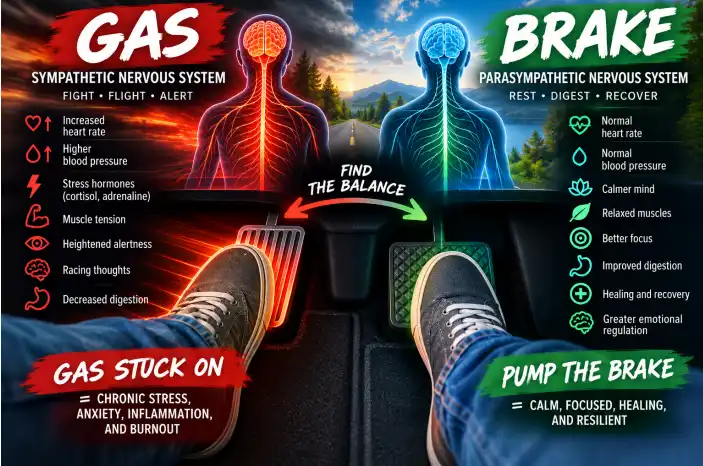
In our office we talk about this as the gas and the brake. A stressed nervous system gets stuck with its foot on the gas (the sympathetic "fight or flight" side) while the brake (the parasympathetic "rest and digest" side) barely works. The clinical name for this imbalance is dysautonomia. Regulation tools try to press the brake harder. Repair frees the brake so it can actually work.
One more piece matters a lot. The vagus nerve is the main nerve that powers your "rest and digest" system. It runs from the brainstem, through the neck, down to the gut, and it helps control digestion, heart rate, inflammation, immune response, and emotional regulation. Subluxation in the upper neck and upper back often interferes with vagus nerve function. When that happens, breathing exercises and vagus nerve devices are trying to stimulate a nerve that can't fully respond yet.
The Body Keeps the Score
Psychiatrist Bessel van der Kolk changed how the world thinks about stress with his book The Body Keeps the Score. His core idea is one every parent has felt: stress and trauma aren't just filed away in the mind. They're held in the body and the nervous system, often far below conscious awareness.
That's why a long, stressful week lands in your neck and shoulders. It's also why stress from a hard pregnancy, a difficult birth, or a rough first year can stay locked in a little one's system long after the moment has passed.
When the body meets overwhelming stress, it shifts into protection mode. That's a brilliant survival response in the moment. The trouble starts when the nervous system gets stuck there. A basic principle of neuroscience is that the body can't be in growth and protection at the same time. A child stuck in protection mode has less energy left for sleeping, digesting, learning, and developing.
You can't talk your way out of stress that's stored in the nervous system, and you can't breathe your way out of it either. At some point, that stuck pattern needs to be released at the source.
The Perfect Storm: How Early Stress Adds Up
Most parents are surprised by how early this stress begins. We call it the Perfect Storm, and it usually builds in layers.
1. Prenatal Stress
When mom carries high stress, anxiety, illness, or certain medications during pregnancy, stress hormones like cortisol reach the developing baby. The nervous system can start life already leaning toward the gas pedal.
2. Birth Interventions
About 1 in 3 babies in the U.S. is now born by C section, and many more births involve induction, forceps, or vacuum assistance. These can place real strain on a newborn's brainstem, upper neck, and vagus nerve. This is often where subluxation first sets in.
3. Early Childhood Stressors
Colic, reflux, and constipation are common, but they aren't just "phases." They're often early signals of a stressed nervous system. When those lead to repeated ear infections and rounds of antibiotics, the gut and immune system take another hit. Research has linked frequent antibiotic use in the first two years to higher rates of allergies, asthma, and gut issues later on.
When these layers stack up, parents often notice things like a baby who hates tummy time, is fussy, cries more than expected, has sleep issues, skips crawling, walks late, or is slow to talk. These are signs the nervous system is working under a heavy load.
This is the key point. When a nervous system has been through this much, it can get locked into such a deep stress pattern that surface level tools simply can't reach it. Those tools aren't wrong. The dysfunction just runs deeper than they were designed to go.
Why Your Regulation Tools Keep Failing
When subluxation creates constant "noise" in the system and the vagus nerve isn't working well, regulation tools are like adjusting the thermostat when the furnace itself is broken. Your effort is real. The system just can't respond to it yet.
Signs That Repair May Need to Come First for Your Child (or for You)
- Therapies and protocols help for a while, then stall or slide backward
- Gut healing plans work briefly, then plateau
- Frequent flare ups after good stretches
- Big reactions to small triggers
- Snapping right back into a stressed state, even after calming activities
- Several body systems struggling at once, like sleep, digestion, immunity, and behavior
The hopeful part: once the nervous system is repaired and in a "ready state," the tools you've already invested in finally have something to work with. Breathwork lands deeper. Nutrition and supplements are better used. Therapies build on each other instead of starting over.
What Nervous System Repair Looks Like at Lako Family Chiropractic
When most people hear "chiropractor," they picture back cracking for pain. Neurologically focused chiropractic care is something very different. It's gentle, it's tailored to the nervous system, and for babies it involves about the pressure you'd use to check a ripe peach.
The goal is to restore clear communication between the brain and body, calm the overactive gas pedal, and help the vagus nerve come back online. That's root cause care, not symptom management.
We don't guess, either. Every new family starts with a NeuroThermal INSiGHT scan. It measures how the autonomic nervous system (the part that runs stress, digestion, sleep, and immunity) is functioning, and shows us where it's stuck in stress mode. We use it to build a care plan and to track real, measurable change over time.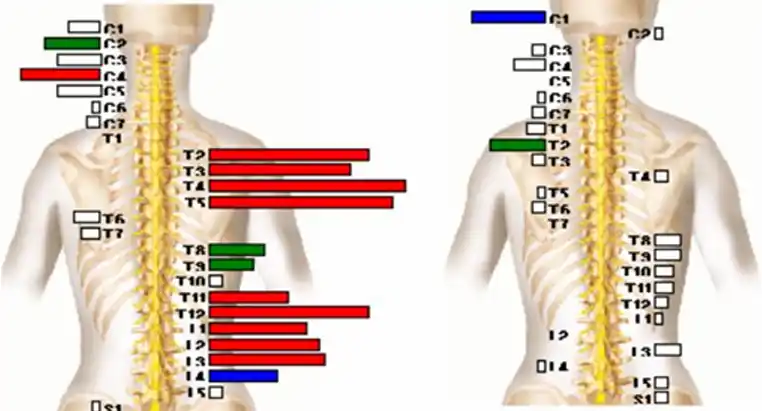
The Right Order: Repair First, Then Regulate
Repair is fixing the engine. Regulation is learning to drive it smoothly. Both matter, and they work best in that order. As repair gets underway, the other supports your family already loves become far more powerful:
- OT, PT, and speech therapy build new skills faster when the brain and body are communicating clearly.
- Breathwork and vagus nerve exercises work better once the vagus nerve itself can respond.
- Craniosacral therapy pairs beautifully with neurologically focused adjustments.
- Neurofeedback trains the brain from the top down, and it holds better on a stable foundation.
- Nutrition, gut support, and supplements are better absorbed and used when the nervous system can properly run digestion and immunity.
- Yoga and movement give the body great input, and a repaired nervous system can finally process it.
How Long Does Nervous System Repair Take?
Here's the encouraging part: many families notice changes sooner than they expect. For some kids, better sleep, calmer moods, fewer tantrums, easier mealtimes, and growth in communication start showing up within the first few weeks of care. Parents often tell us their child just seems more like themselves again.
Every child is different, and how quickly things shift depends on how much stress their nervous system has been carrying. For some, the deeper, lasting changes build over months of consistent care. But those early wins matter. They're a sign the nervous system is starting to let go of protection mode, and they often mean the tools you'd given up on finally start working again too.
Your Family Doesn't Need More Hacks. It Needs the Right Foundation.
Your child's body has been doing its best to protect them. With the right support, that same nervous system can shift out of protection mode and into healing, growth, and connection. The body keeps the score. With neurologically focused chiropractic care, the nervous system can reset it.
If you're a parent in Roswell, Alpharetta, Milton, East Cobb, or Woodstock and this post sounds like your story, we'd love to meet your family. Schedule a visit with Dr. Steve Lako and our team at Lako Family Chiropractic. We'll start with a NeuroThermal INSiGHT scan so you can see exactly where your child's nervous system stands, and whether repair is the piece you've been missing.

Monday
9:00am - 5:00pm
Tuesday
8:00am - 5:00pm
Wednesday
8:00am - 5:00pm
Thursday
10:00am - 1:00pm
Friday
Closed
Saturday & Sunday
Closed

Lako Family Chiropractic
1455 Old Alabama Rd Ste 125
Roswell, GA 30076